Tuesday, December 15, 2015

JAMESTOWN ADVENTURE

We are have begun our study of the Southeast Region of the United States. One important sight we visited was Jamestown, Virginia. Life was tough for the people in this early settlement. Food was scarce because they did not know much about hunting and gathering in this new land. Also, many came down with illnesses from mosquitoes. But, in the end they overcame all these challenges to create a successful and rich colony. Try your hand at living like an early settler in this on-line game. Just click on the picture to try JAMESTOWN ADVENTURE.
State Standards Covered:
6. Define and give examples of natural resources in the United States. (E)
 7. Give examples of limited and unlimited resources and explain how scarcity compels people and communities to make choices about goods and services, giving up some things to get other things. (E)
 Identify the five different European countries (France, Spain, England, Russia, and the Netherlands) that influenced different regions of the present United States at the to place names, architectural features, and language.  Grade 4 Learning Standards (continued) Describe the diverse nature of the American people by identifying the distinctive contributions to American culture of: 
 major European immigrant groups who have come to America, locating their 
countries of origin and where they tended to settle in large numbers (e.g., English, Germans, Italians, Scots, Irish, Jews, Poles, and Scandinavians)
free glitter text and family website at FamilyLobby.com

Monday, December 7, 2015

HOUR OF CODE

HOUR OF CODE

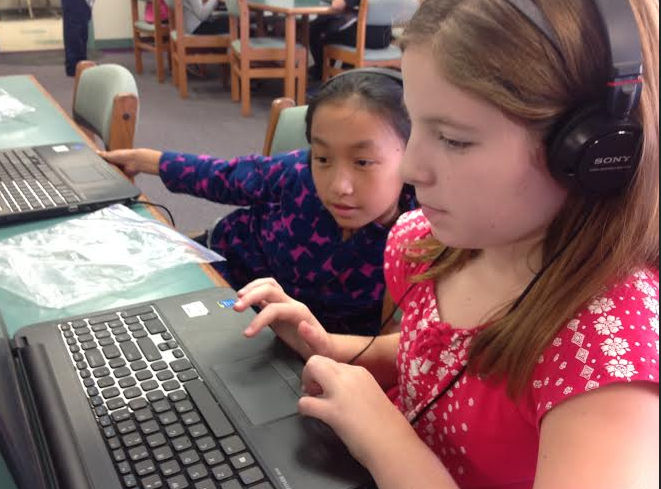
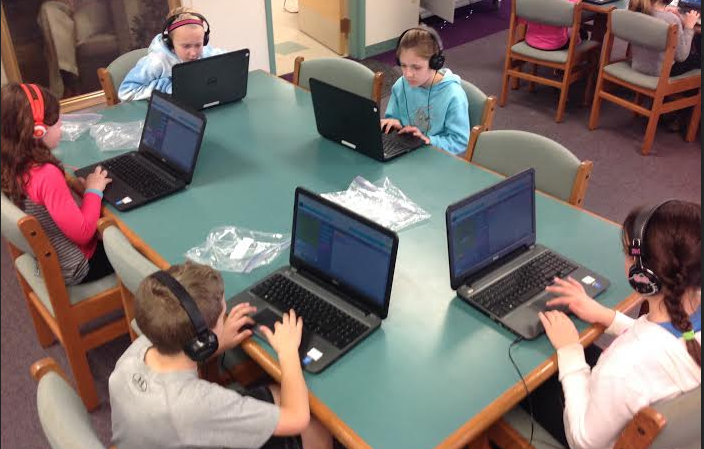
Our class had the opportunity to explore the "Hour of Code" today with Mrs. Klipfel. This program allows students to take tutorials at their own pace to learn about writing code for computer programming. We live in such a digital age, that we felt it was important for the children to experience this unique task. The pictures and videos below show how engaged the class was with this task. 
Students are invited to visit the website to continue what they started and/or work on other tasks. Click on the link to learn more and/or start the tutorials.
https://hourofcode.com/us


From the website:
What is the Hour of Code?
The Hour of Code is a one-hour introduction to computer science, designed to demystify code and show that anybody can learn the basics. Every student should have the opportunity to learn computer science. It helps nurture problem-solving skills, logic and creativity. By starting early, students will have a foundation for success in any 21st-century career path. See more stats on code.org.
free glitter text and family website at FamilyLobby.com

Friday, October 23, 2015

Wednesday, October 21, 2015

SCIENTISTS AT WORK

We investigated the adaptation that owls use to eat known as owl pellets.

We opened up the owl pellets and found some pretty interesting things.
Adaptations are awesome! This unit of study has shown us how plant and animal adaptations help living things survive. They may help the plant reach sunlight such as a tendril on a bean plant or help an animal blend in to its surroundings such as camouflage on an Eastern screech owl.
As part of our investigation into adaptations, we looked closely at OWL PELLETS. The pictures below show our class examining this adaptation that helps owls eat to get energy. It also leads us to understand the ENERGY FLOW and FOOD CHAINS. 
Look at the bone we found in the owl pellet.

Using the microscopes helps us determine which type of bones we found.

It takes patience and a skilled hand to locate the bones among all the fur.

Here is a close up of some of the bones we found.

We sorted the bones using a chart to help us figure out what kind of animal was in the pellet.
This one may be a skull of a rodent.


The owl pellet has to be broken apart and sorted.

Mrs. LaRussa shows us how the bone shapes are similar to a human's structure.

This is amazing!


free glitter text and family website at FamilyLobby.com

Tuesday, September 29, 2015

COMPASSES IN CLIC!

We have been studying map skills in social studies. To enhance our learning experience, we went to the CLIC Lab to learn more about how compasses work. Mrs. LaRussa designed five experiments to help us explore how compasses work. These activities helped us integrate  some important social studies and science concepts. The five experiments we did showed us:
  • that magnets have two poles,
  • that compasses point north and south,
  • that the Earth is a giant magnet 
The essential questions we focused on are:
1. How does a compass work?
2. How is the Earth like a giant magnet?


Max and Max investigate how a compass works.


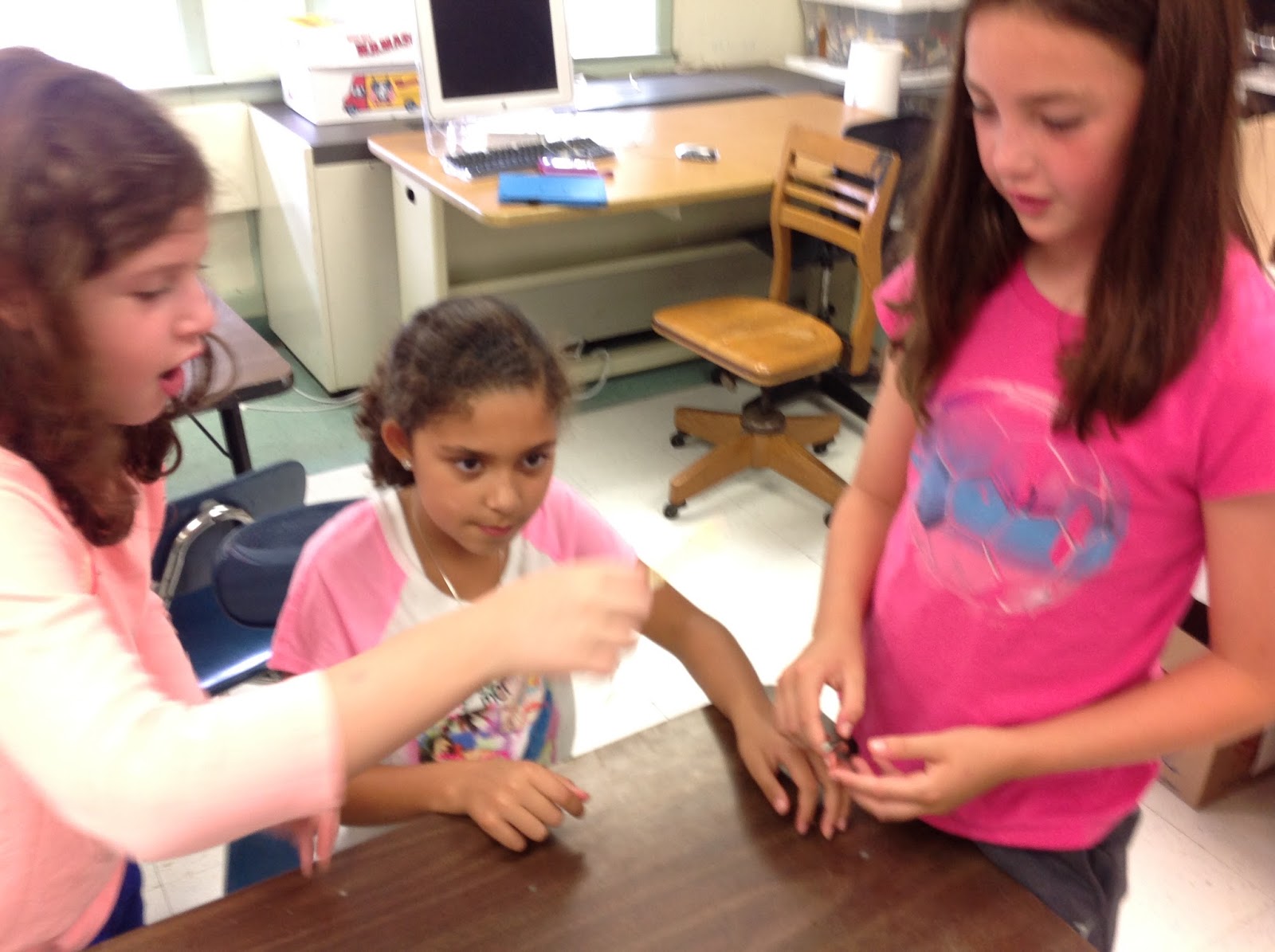
Kaylie and Lilly look on as Sarah makes a temporary magnet out of a needle just by rubbing it on a magnet.

We made temporary magnets and floated them on cork in water to show how compasses work.

Emily and Katrina work on making their temporary magnet float.
Jack and Brady work on the last challenge to make a south facing magnet.

The state standards we are enriching with this activity are:
Social Studies
1. Use map and globe skills to determine absolute locations (latitude and longitude) of
 2. Interpret a map using information from its title, compass rose, scale, and legend. (G)
Science
9. Recognize that magnets have poles that repel and attract each other.
 10. Identify and classify objects and materials that a magnet will attract and objects and materials that a magnet will not attract.


free glitter text and family website at FamilyLobby.com

Thursday, September 3, 2015

OUR FIRST DAY!

We discussed two themes that will run throughout our year: 
The first is THINK! Fourth grade is all about learning to think for yourself independently AND to learn to be comfortable with the struggle as you problem solve!
The second is GRIT. Please watch this video with your child and ask him/her to tell you the examples of grit that he/she sees. 
free glitter text and family website at FamilyLobby.com

Friday, August 28, 2015

WELCOME TO 4K!

Welcome To 4K
 I am so excited to meet you all and start our year of learning and fun together. In fourth grade at Proctor School, there are many projects and interactive tasks that we will do. Here is a list of some of them: 
  • Teddy Bear Project
  • Wingmasters
  • CLIC
  • Electric Circuits
  • Magnet Activities
  • Rocks and Minerals
  • Two Field Trips
  • Long Division 
  • Pay Day 
  • Class Store
  • Poetry Sharing
  • Geography Show
  • and much, much more
Look at the past blog posts to get a glimpse of what you have in store for you in 4 K! 
What are you looking forward to?
free glitter text and family website at FamilyLobby.com